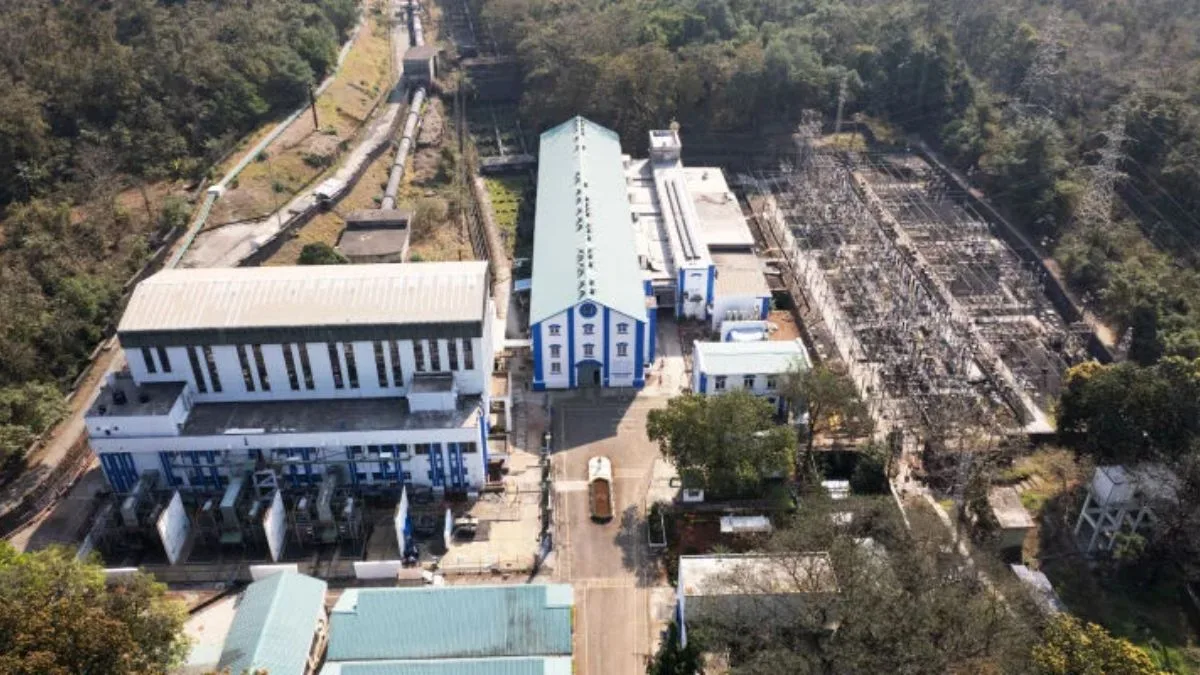
Tata Power informed the stock exchanges on Monday that it has successfully completed the first tranche of its strategic investment in Dorjilung Hydro Power Limited (DHPL), which is a Special Purpose Vehicle company developing a 1125 MW hydro project in Bhutan, at an estimated total project cost of approximately Rs 13,100 crore.
The company invested an initial Rs 50 crore, to acquire 50,00,000 equity shares, which represents 40% of DHPL’s issued capital. The total planned investment for the full acquisition of the project is approximately Rs 1,572 crore.
Advertisement
The remaining tranches of the investment will be completed over the next six years, according to the statement.
No Indian Governmental or regulatory approvals were required for this phase of the acquisition.
It may be recalled that Tata Power had previously announced its intention to acquire a 40% stake in the 1125 MW Dorjilung Hydro Power Project’s SPV for about Rs 1,572 crore. This initiative is a Public-Private Partnership (PPP) between DGPC of Bhutan (60% stake) and Tata Power (40% stake). The project, located on the Kurichhu River, is designed to generate over 4,500 GWh annually and is slated for commissioning by September 2031.
The World Bank Group has provided significant financing, approving an $815-million package to support the project’s development and mobilise private investment.
Tata Power’s acquisition of the stake in DHPL is strategic. Tata Power’s goal is to accelerate its clean and green energy transition. Although the acquisition itself does not constitute a related party transaction initially, DHPL will become an associate company of Tata Power after the acquisition process is completed, thus classifying it as a related party subsequently, according to the statement.
The investment solidifies Tata Power’s commitment to expanding its clean and green energy portfolio. It strengthens its strategic presence in the Himalayan renewable energy corridor and underscores its role in cross-border clean energy cooperation between India and Bhutan.
The project is crucial for Bhutan’s energy security and developmental priorities, with 80% of the power to be supplied to India, reinforcing regional energy stability, according to the statement.